





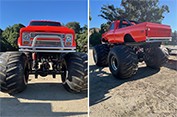
 A Reel Monster Truck completes Katy Perry Music Video
 Luxmuralis Unites with 4Wall to Ignite North American Debut of 'Time' at Washington National Cathedral
 Step and Repeat LA, Powered by Collins Visual Media, Produces 30' Media Wall for American Black Film Festival Honors
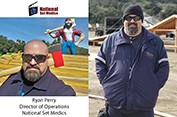 Director of Operations,
Ryan Perry - "The Silent Lion" NOW OFFERING STUDENT FILM RATES AT TEJON RANCH
 The Backstage Pass to
DTLA'S CREATIVE UNDERGROUND Pacific Studios New High-Resolution Stock Images Available For Your Next Production
 Studio Technical Services Inc.
Spring 2026 Update Coffee House Industries Builds Custom Paramount+ LED Octagon Stage for UFC Promotional Content at UFC Apex
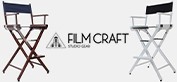 Filmcraft Introduces Two Stunning New Director Chair Frame Finishes: White and Walnut
 The American Movie Company is the "Go-To" Film Production Company in New York City
 Studio Tech Supports Remote Media Production at King of the Hammers
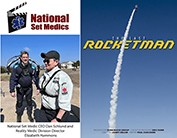 National Set Medics CEO Puts His Life in the Hands of His Own Medics'
 United Rentals Entertainment Division
 Step and Repeat LA Produces Media Wall and Hedge Display for City of Pasadena's 2026 Black History Festival
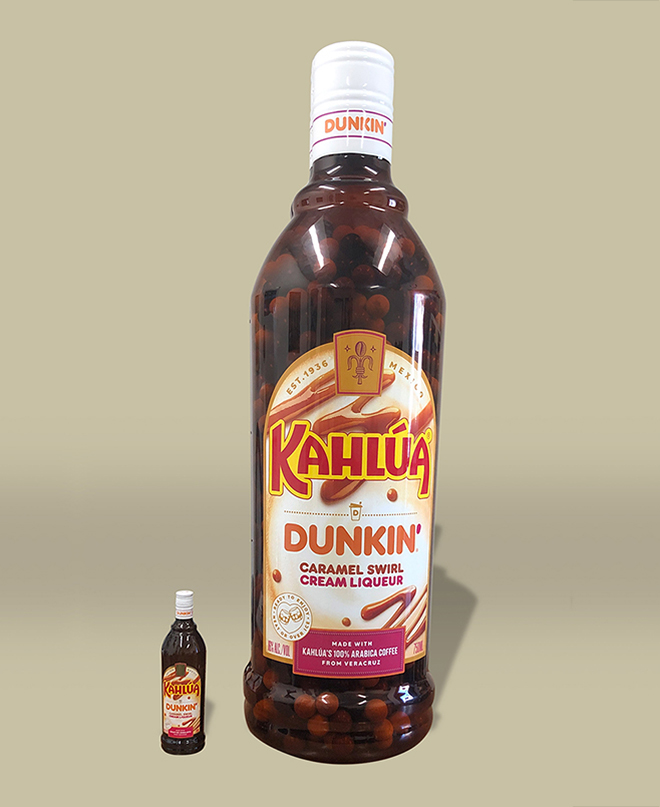 WLA3D mixes it up with Duncan and Kahlua
 WeCutFoam Created Decor Signs For Royal Caribbean Celebrity X Cruise Ships
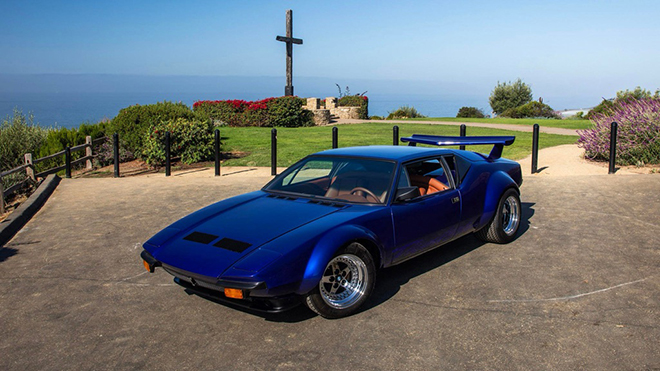 Action Picture Cars 1973 Pantera for your next Production
 Why Everyone's Loving Our Arch Walls
industry news
The Latest Industry News for the Exciting World of Production.
Creative Handbook puts together a bi-monthly newsletter featuring up-to-date information on events, news and industry changes.
Add My Email
October 17, 2025
Email This Article |  |
| 
| 
2026 Film and TV Forecast: New York
1. Favorable Incentives and State Support
New York is expanding its Film and Television Tax Credit Program to attract more productions to the state. The program now offers base incentives of around 30 percent on qualified expenditures and up to 40 percent under certain conditions.
The expansion includes upstate and nonmetropolitan zones, encouraging productions beyond New York City. This makes New York more competitive with other leading production centers such as Georgia and Louisiana.
Outlook for 2026:
On-location and studio production are expected to grow steadily. With stronger incentives in place, projects that had migrated to other states are likely to return, bringing jobs and spending back to New York.
2. Infrastructure and Studio Capacity Growth
A major development is Wildflower Studios in Astoria, Queens. The Robert De Niro backed complex includes 11 vertically arranged sound stages with built-in postproduction and office space. This design allows large-scale productions to thrive in space-limited urban environments.
Outlook:
Producers, LED wall specialists, and support service providers should position themselves near these new studio hubs to take advantage of growth in the New York production market.
3. Recovery and Growth in Production Volume
After a challenging 2024 due to strikes and lingering pandemic effects, 2025 saw a measurable recovery. Filming and production spending were up between 5 and 8 percent from 2024 levels.
Nationally, total production spending approached 40 billion dollars by the end of 2025, close to pre-strike numbers. New York remains among the top three production centers in the United States, just behind California and Georgia.
Forecast for 2026:
Production activity in New York is projected to grow by 5 to 12 percent depending on how quickly incentive-driven deals convert into active productions.
4. Content Strategy, Platforms, and Monetization Trends
The global entertainment and media industry is expected to grow at about 3.7 percent annually through 2029.
Streaming platforms will continue to dominate consumer behavior, while traditional broadcast television will keep declining. Advertising-supported streaming models are becoming more common as services search for sustainable profits.
Large media companies are expected to consolidate or form partnerships to simplify the streaming landscape and strengthen control over distribution.
Outlook for New York Producers:
The demand for high-quality, flexible content will increase. Producers who can deliver engaging stories that perform on both subscription and ad-supported platforms will have a competitive advantage.
5. Technology and Production Innovation
Virtual production using LED walls, real-time motion tracking, and Unreal Engine technology is becoming mainstream. Costs are falling and the workflow is becoming more efficient.
Artificial intelligence tools are being integrated into previsualization, editing, localization, and even creative development. Producers are learning to combine artistry with technology to achieve faster and more versatile output.
Synthetic avatars, generative video, and multilingual AI voices are finding a place in commercial, corporate, and training content.
Opportunity:
Companies that invest in virtual production facilities, AI-driven workflows, and hybrid pipelines will gain a strong competitive edge. New York's mix of talent and technology makes it an ideal base for innovation.
6. Risks and Challenges
Other states and countries continue to enhance their own incentive programs, which could draw productions away from New York.
Inflation, higher labor costs, and increased financing costs may constrain budgets and slow down high-end productions.
Complex permitting, labor regulations, and limited parking or access in New York City can delay shoots or increase costs.
If global streaming consolidation stalls or consumer spending weakens, production demand may flatten temporarily.
7. Strategic Actions for 2026
1. Align production budgets with state incentives. Build local hiring and spending into every project to qualify for maximum credits.
2. Collaborate with new facilities. Partner with Wildflower Studios and other emerging complexes to secure soundstage access.
3. Adopt new production pipelines. Incorporate virtual production, AI-assisted editing, and remote collaboration tools to reduce costs and increase speed.
4. Create flexible distribution strategies. Design content that works across streaming, broadcast, corporate, and live platforms.
5. Develop early. Secure projects and funding before incentive caps or annual limits are reached.
6. Expand supporting services. Equipment rental, LED wall management, postproduction, and live-streaming support will all see higher demand.
Conclusion
New York is entering 2026 with renewed momentum. Expanded incentives, new production infrastructure, and advancing technology make the state one of the strongest and most resilient centers for film and television production in the world.
Studios, producers, and investors who align early with these trends will be well positioned to capitalize on the state's creative and financial opportunities.
The Arri Alexa Mini LF: A Game-Changer
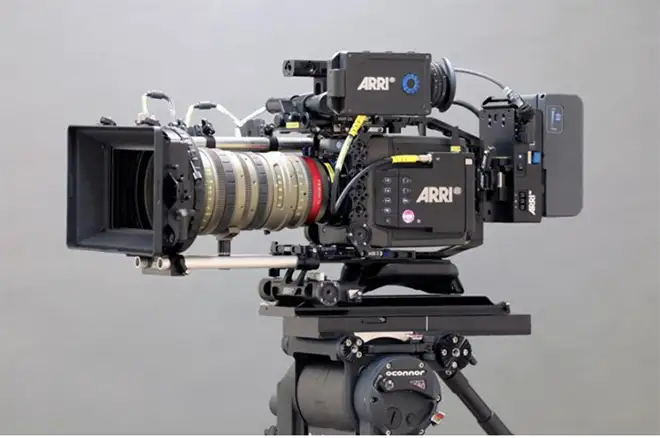
The Alexa Mini LF is ARRI's attempt to put their large format (LF) imaging into a compact, cinema-ready body that is smaller and more riggable than the full Alexa LF. It uses the same large sensor (A2X) as the Alexa LF, but in a body closer in size to the original Mini line.
It's clearly marketed to offer the image quality of ARRI's high-end cinema line while giving more flexibility on rigs, gimbals, drones, handheld, etc.
The question is: for a filmmaker, cinematographer, or production house, is owning one a smart move? Let's dig into the pros and cons.
Alexa Mini Reviewe
Steve Romano, Cinemetographer and AI artist, joins The american Movie Company team.

Merging Traditional Production with the Power of AI
I am excited to share that my work in production is evolving beyond traditional filmmaking and moving boldly into the world of AI-driven content creation.
I still love the craft of live-action production. My facility is fully equipped with professional cameras, lenses, lighting, and skilled crews. We have also integrated motion control systems that allow for precise, repeatable camera movement for commercials, visual effects, and high-speed product shoots.
At the same time, the rapid growth of AI is changing the creative landscape, and I am using these tools to bring more flexibility, speed, and imagination to every project. From concept through delivery, I am combining human creativity with intelligent technology to expand what content can be.
I am always interested in connecting with brands, agencies, and creators who want to explore what is next. Whether you need traditional production or new AI-powered workflows, if you can imagine it, we can create it together.
Let's connect and talk about the future of storytelling.
Steve Romano
OpenAI's New Era of ChatGPT and What It Means for Film and Television Professionals

The recent update to ChatGPT is one of the most important advances yet for creative industries. It does not just make conversation smarter. It changes the way we manage, plan, and execute production.
For the first time, the tools we use to communicate can also perform the work. ChatGPT now acts as an intelligent hub that connects directly with the software, databases, and communication systems we already rely on in film and television.
This is not about replacing people. It is about giving producers, directors, editors, and coordinators a single connected environment where they can run their entire production from one place.
The Apps SDK: A Creative Operating System
The new Apps SDK allows third-party programs to live directly inside ChatGPT. This means that applications like Frame.io, Canva, Adobe Premiere, or ShotGrid can become accessible within the same conversation.
Imagine opening a chat with your team and being able to do the following without switching windows:
• Pull the latest cut of your film from Frame.io.
• Review client feedback and mark timecode notes.
• Ask ChatGPT to generate a revised script based on those notes.
• Have the system automatically update the script in Final Draft and save a copy to Google Drive.
• Send an approval message and calendar update to your production team.
All of that can happen inside one chat thread.
For producers, this eliminates the back-and-forth between emails, text threads, and multiple cloud drives. For editors, it means you can receive creative notes, adjust the sequence, and deliver an updated cut all within one workspace. For coordinators, it means every production document, from the call sheet to the budget, is updated in real time.
The Apps SDK turns ChatGPT into a control room for every stage of the creative process.
The Agent Kit: Your Digital Production Assistant
The Agent Kit is designed to create self-running assistants that complete real tasks. These agents can plan, reason, and act independently. They can also remember previous steps and chain together multiple actions in sequence.
For example, a film production could build an agent that does the following:
• Every morning, check the schedule and confirm call times with the crew.
• Review the weather report for each location and send alerts if conditions change.
• Pull expense data from your finance system and update the daily cost report.
• Send a summary of dailies to your postproduction team.
• Remind the client services department to prepare the next day's catering order.
This is not science fiction. These processes can run automatically once the agent is configured.
For smaller production teams, agents can function like an entire support staff. They can prepare pitch decks, track invoices, handle wrap reports, and even send progress updates to clients.
For larger studios, they can coordinate across departments by keeping everyone working from the same information.
Agents can also be used in postproduction. An agent could monitor the status of render jobs, send notifications when they complete, organize final deliverables into folders, and prepare files for upload to distribution platforms.
Codex: The Creative Engineer Behind the Scenes
The new Codex upgrade is the system that allows ChatGPT to write and understand code more fluently. For production professionals, that means your AI assistant can now connect directly to your technical systems.
Codex can:
• Create and edit scripts for automated editing tasks.
• Write custom plugins for software like After Effects or DaVinci Resolve.
• Automate file management on shared drives or cloud servers.
• Adjust lighting controls, playback systems, or LED wall settings in virtual production environments.
It can even build bridges between software that normally does not communicate well.
For example, if your scheduling tool and your accounting system use different formats, Codex can write the script that makes them share data automatically.
The result is a studio that runs more smoothly, where repetitive technical steps are handled instantly and every department has access to real-time information.
Hardware and Performance
OpenAI's partnerships with AMD and NVIDIA are another important piece of this story. These companies are providing the next generation of high-performance chips that will power advanced AI video tools.
For filmmakers, this means faster rendering, improved color grading performance, and more realistic AI-generated imagery. It also means that tools like Sora and other text-to-video systems will run faster and deliver higher-quality results.
Real-time virtual production, once limited by processing power, will become more accessible. LED wall scenes, previsualization, and AI-driven set extensions will render with greater accuracy and less delay.
The Role of the Creative Professional
Some people worry that AI will replace creative roles, but this upgrade proves the opposite. What it really does is take away the busywork.
Imagine being able to hand off every noncreative task - scheduling, reporting, organizing - so that you can focus on the scene, the story, and the image.
A director could use ChatGPT to coordinate postproduction notes, organize footage, and even generate alternative edits for review.
A cinematographer could use it to calculate lighting ratios, match look profiles, or automate exposure planning for complex LED wall scenes.
An editor could use it to manage revision requests, automatically apply template effects, and generate alternate cuts for social media distribution.
And a producer could use it to track spending, manage crew communication, and generate client-ready reports - all inside a single conversation thread.
The Bigger Picture
OpenAI is building what many are calling an AI Operating System. It brings together apps, agents, and code into one seamless environment.
For the film and television industry, this means every tool we use - from preproduction planning to postproduction delivery - will soon connect through a single intelligent interface.
The potential impact is enormous. Faster workflows. Fewer errors. Lower costs. Greater creative freedom.
It is the next stage of our industry's evolution. Just as digital editing replaced film splicers and virtual production replaced green screens, integrated AI systems are about to replace the disconnected workflows that slow down creativity.
The Bottom Line
The OpenAI updates are not about novelty. They are about infrastructure. They lay the groundwork for a production ecosystem where creativity moves at the speed of thought.
For film and television professionals, the message is clear. The next wave of innovation will not come from a new camera or lens. It will come from the intelligent connection between all the tools we already use.
And that connection now begins inside ChatGPT.
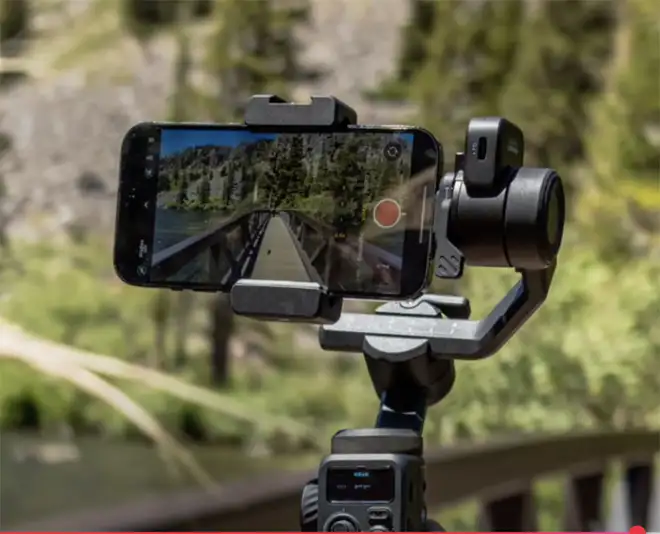
YHere's an in-depth review of GoPro's Fluid Pro AI - what works, where it struggles, and whether it's a good fit for video-production pros.
Visit our Website
The Fluid Pro AI is GoPro's new AI-powered gimbal/stabilizer, designed to support GoPro action cameras, smartphones, and compact point-and-shoot cameras (with a payload of up to ~400g).
Teleprompting In LA & All Major Movie Markets
AMARAN 60d vs 60x: which one should YOU buy?
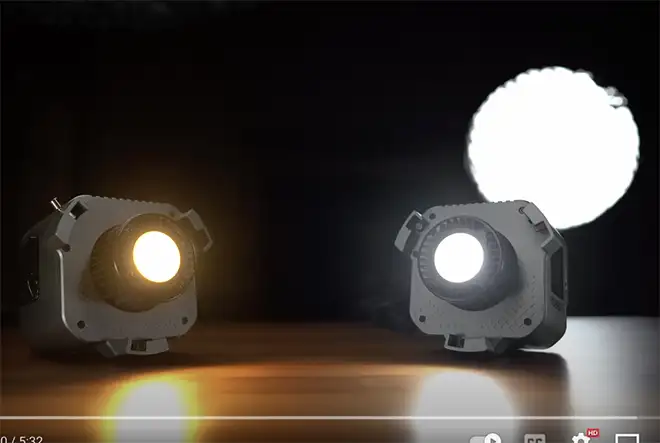
Here's a breakdown comparing Aputure/Amaran COB 60d S vs Amaran COB 60x S, and guidance on which one might be best for you.
Visit our Website
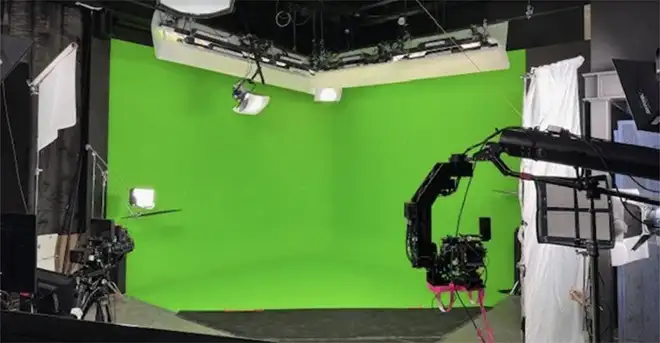
Best Green Screen Studios NYC / NJ
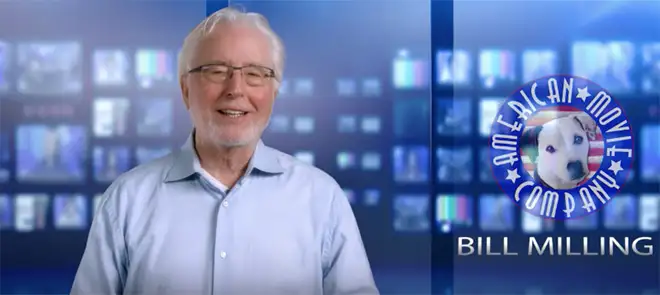
AmericanMovieCo.com
No Comments
Post Comment


Creative Handbook
17631 Ventura Blvd., Ste. 320
Encino, CA 91316